
Before the first red
Snooker has always been an unlikely success. It asks for a very large table, rewards patience, and can turn a player walking slowly around a difficult safety into compelling television. Its history makes sense only when you follow the people and places as well as the trophies.
1875: the beginning in India
The accepted origin story begins in 1875 at Jubbulpore—now Jabalpur—in central India. British Army officers were already playing several forms of billiards. They began experimenting with a game that added coloured balls to the familiar reds and black, building a new scoring sequence from older cue-sport ideas.
A young lieutenant named Neville Francis Fitzgerald Chamberlain is credited with supplying the name. In military slang, a “snooker” was a first-year cadet. Chamberlain used it when a fellow player missed, then recognised that everyone in the room was new to the game itself. This Neville Chamberlain was the soldier and later police officer—not the future prime minister.
The rules travelled back to Britain and acquired structure over time. The game we recognise did not arrive complete in a single evening, but the Jubbulpore story explains something that remains true: snooker was born from people tinkering with a table because the existing games were not quite enough.
Joe Davis and the early professional game
Snooker’s first great professional architect was Joe Davis. He helped stage the inaugural professional World Championship in 1927 and won it. Then he won every championship he entered, collecting fifteen titles before retiring undefeated from the event in 1946. Davis was not merely the best player of his era; he helped turn a developing pastime into a professional contest with standards, records and an audience.
The early game was never exclusively male, even when opportunity and coverage suggested otherwise. The first Women’s Amateur Championship was held in 1933. Joyce Gardner, Ruth Harrison, Thelma Carpenter and their contemporaries belong in the sport’s early competitive history, not in a footnote attached to it. A recognised World Women’s Snooker Championship followed in 1976, with Vera Selby taking the title.
Professional snooker endured difficult years after the Second World War. Internal disputes, thin fields and competition from other entertainment all took their toll. It needed a new medium to reveal what the game had been hiding.
1969: snooker meets colour television
BBC2 launched Pot Black in July 1969 as colour television was being established in Britain. The fit was almost suspiciously perfect: a green cloth, bright coloured balls and a game whose geometry could be understood from a well-placed camera. In black and white, Ted Lowe’s famous guidance—viewers could infer which ball was behind the pink—became part of snooker folklore. In colour, the sport finally looked like itself.
The programme used short one-frame matches and brought leading players into homes regularly. Ray Reardon, John Spencer and others became familiar faces. Television did not simplify snooker so much as teach viewers how to watch it: not only the pot, but the angle, the cue-ball route, the safety and the trap being set three shots ahead.
1977: the Crucible
The World Championship moved to Sheffield’s Crucible Theatre in 1977. It was an inspired piece of sporting theatre: a compact auditorium, spectators close to the players, and an atmosphere in which a cough could feel like an incident. The venue’s intimacy gave television pictures an intensity that larger arenas struggled to match.
John Spencer won the first Crucible championship. The theatre soon became more than a venue; it became the test against which careers were measured. Players can win major titles around the world, but the walk down those steps in Sheffield still carries a particular weight.
Alex Higgins and a changing game
Alex Higgins had already won the world title in 1972, but his importance is not contained by the results column. He played quickly, visibly felt every turn in a match, and made risk look like a form of honesty. At a time when television was learning what kind of sport snooker might become, Higgins supplied danger and personality in abundance.
His second world title in 1982, won against Ray Reardon, produced enduring images: the late clearance against Jimmy White in the semi-final, the tears after the final, and the sense that the audience had watched a man hold himself together by the last thread available. Higgins could be brilliant and difficult, inspiring and destructive. A serious history should resist turning a complicated person into a tidy folk hero. What it can say is that he changed the temperature of the sport.
The 1980s: when snooker filled the screen
The decade belonged to snooker in a way that is now difficult to imagine. Steve Davis became the game’s defining winner, combining technical control with a match temperament that made errors look like administrative oversights. Terry Griffiths, Cliff Thorburn and Dennis Taylor brought distinct styles and stories. Jimmy White played with a freedom that kept an audience believing, even when the ending hurt. Alex Higgins remained capable of turning any match into live theatre.
The players became public figures beyond the sport. They appeared on chat shows, in newspapers and in millions of living rooms. Clubs were busy. Children who had never touched a twelve-foot table understood that the black was worth seven and that a snooker could matter more than a pot.
Steve Davis led Dennis Taylor 8–0, but Taylor recovered and the World Championship final reached 17–17. In the deciding frame, the last black settled the title after midnight. Taylor potted it, raised his cue and pointed to the sky. The estimated BBC2 audience of 18.5 million remains one of the clearest measures of snooker’s place in British popular culture at its peak.
The famous final did not create the boom by itself. It was the perfect expression of what viewers had learned to love: tactical pressure, recognisable characters, a long night and a conclusion no scriptwriter would have dared submit.
Hendry and the 1990s
Stephen Hendry arrived with a different idea of control. He attacked open frames, split the pack earlier and treated century-making as a repeatable method rather than an occasional flourish. At 21 he became the youngest world champion, and his seven Crucible titles in the 1990s reset expectations for an era.
Hendry’s dominance accelerated the professional game. Players could no longer rely on containing an opponent indefinitely; a single loose safety might surrender the frame. Jimmy White’s six world-final defeats are part of that story, four of them against Hendry, but so is White’s enduring connection with the crowd. Winning explains much of sport. It never explains all of it.
O’Sullivan and the modern era
Ronnie O’Sullivan’s career joins several eras together. His speed, cue-ball control and ambidextrous ability made the difficult look conversational, while his longevity forced the record book to keep moving. Yet the modern game is not a single-player biography. John Higgins and Mark Williams, fellow members of the celebrated 1992 professional intake, built great careers of their own. Mark Selby brought formidable tactical resilience; Neil Robertson became Australia’s first world champion since Horace Lindrum; Judd Trump expanded the vocabulary of attacking shots.
Equipment, cloth conditions, coaching and analysis have evolved. Break-building is more aggressive, preparation more professional and the calendar more international. The central test remains untouched: make a decision alone, deliver the cue straight, and live with where the white finishes.
Snooker goes global
Snooker travelled long before the professional tour fully reflected it. Its roots in India and deep traditions across Asia, Africa and the Commonwealth make the phrase “going global” slightly misleading: the players and followers were already there. What changed was the scale of professional opportunity, broadcasting and investment.
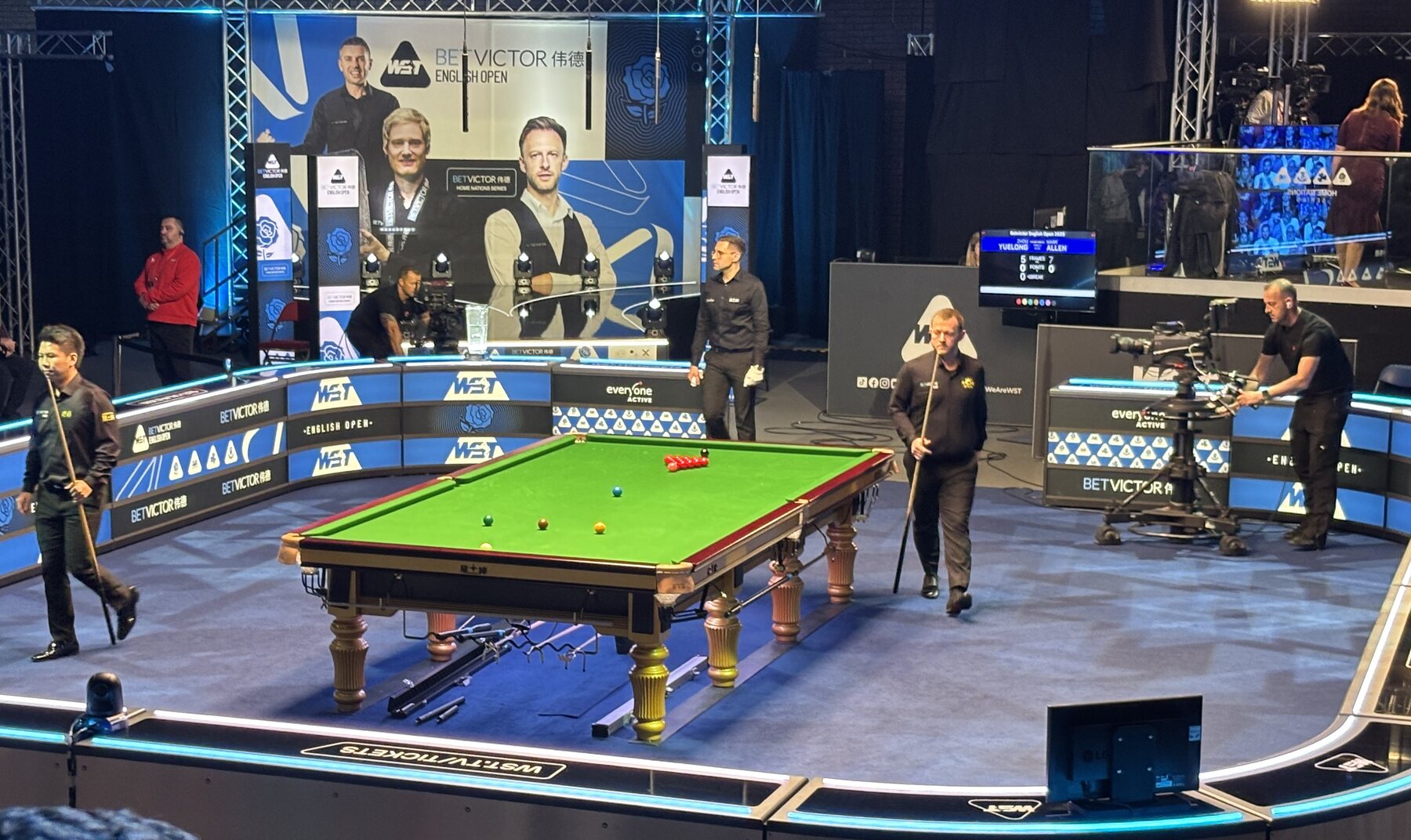
China has been central to that change. Ding Junhui’s breakthrough titles gave a vast audience a champion with whom it could identify, and a growing group of Chinese players has since reshaped the tour. Major events now reach further across Asia and Europe, while amateur and development pathways connect many more countries to elite competition.
The whole game
Women’s snooker has its own long competitive line, from the championships of the 1930s through Allison Fisher, Karen Corr, Kelly Fisher and Reanne Evans to Ng On Yee, Mink Nutcharut, Bai Yulu and a genuinely international modern tour. World Women’s Snooker is also an official qualification pathway to the professional World Snooker Tour. Women’s snooker is not an adjacent version of the sport; it is part of snooker’s competitive history and future.
Disabled players are part of that same sporting history. Snooker appeared in the earlier Paralympic movement, and World Disability Billiards and Snooker, founded in 2015, now runs classified competition and open days for players with a range of impairments. Classification provides fair competitive context; it does not define a player’s relationship with the game.
Club players, officials, coaches, table fitters, volunteers and spectators rarely appear in championship lists, but they keep the sport alive between televised events. The history of snooker is not complete without the local room where somebody is learning a bridge, borrowing a house cue or being told—correctly—that the blue goes back on its spot.
Today, and the next visit
Snooker now has instant scores, worldwide video, detailed statistics and a calendar that can be followed from almost anywhere. That abundance is a gift, though it can flatten the game into updates and clips. The best way to understand snooker remains to watch a full frame, notice the shot that prevented the pot, and then find a table if you can.
History gives the current game more texture. A Crucible walkout carries 1977 with it. A fast century carries Hendry and O’Sullivan. A women’s world final belongs to a competitive line that began generations ago. An open day or classified event adds another chapter to the same sport. The tale is still being written, one visit at a time.
Keep exploring
Go to the live hub for the current game, find somewhere to play, or browse the books selected for deeper reading.